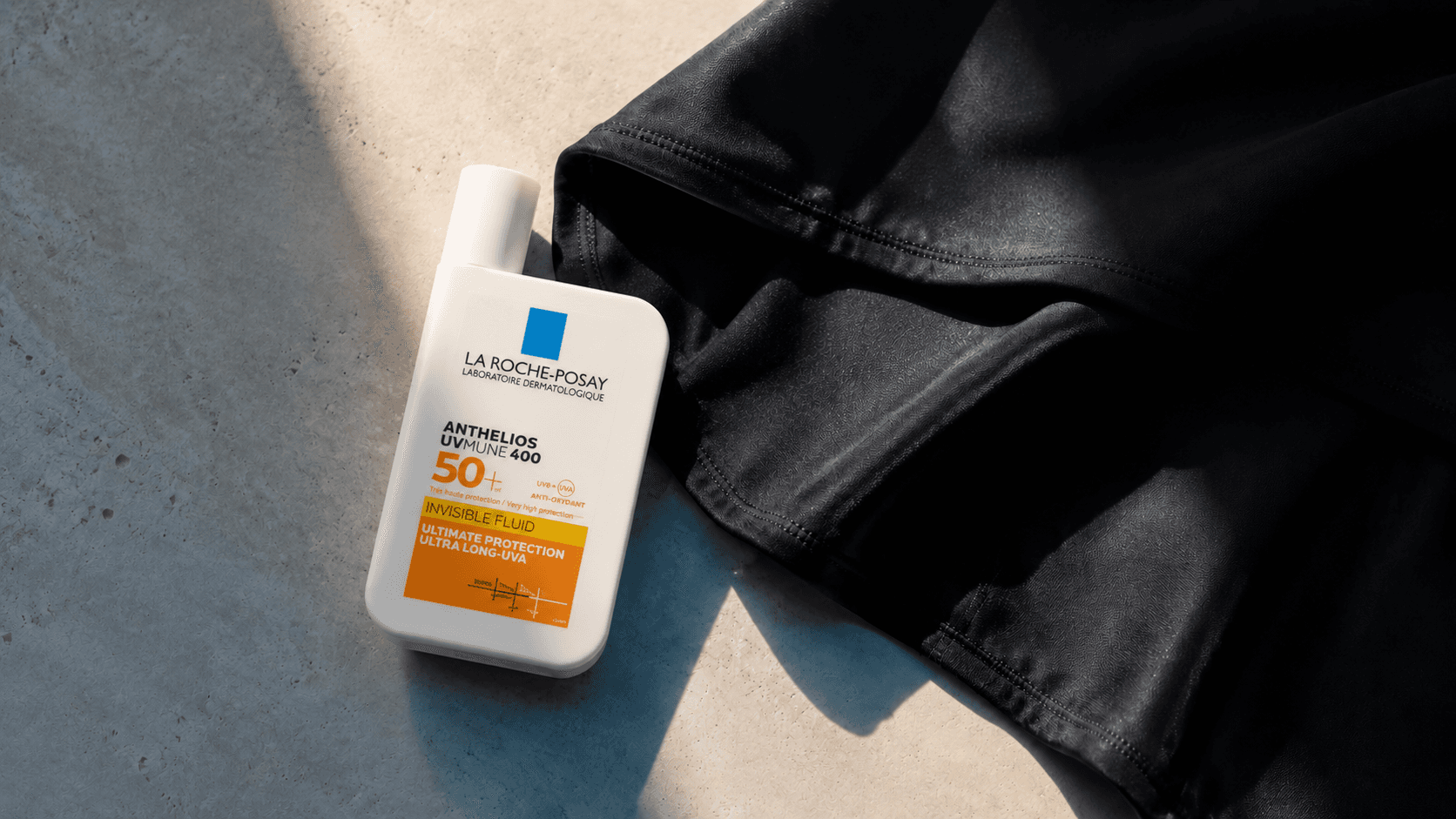
Sunscreen and sun-protective clothing solve different parts of the same problem — and work best as complementary tools.
SPF and UPF are often placed side by side, but they are not interchangeable ratings. SPF — sun protection factor — is determined by testing how well a sunscreen protects against sunburn under standardised conditions. Because sunburn is driven mainly by UVB, SPF is principally an indicator of UVB protection. In the United States, a separate broad-spectrum test is required before a sunscreen can claim protection across both UVA and UVB wavelengths.
UPF — ultraviolet protection factor — applies to textiles. It is calculated from the amount of ultraviolet radiation transmitted through a fabric in laboratory testing. A UPF 50 fabric allows approximately one-fiftieth of the relevant UV radiation to pass through; in practical terms, it blocks about 98%. Under the current Australian and New Zealand standard, UPF 50 and 50+ sit in the excellent-protection category.
The two systems also behave differently in real life. Sunscreen performance depends on applying enough product, covering every exposed area, allowing it to form an even film and reapplying when indicated — particularly after swimming, sweating or towelling. Clothing provides a physical layer over the area it covers and does not need reapplication. But clothing is not automatically highly protective: transmission depends on fabric structure, fibre, colour, stretch, moisture and wear.
This is why a layered strategy is more reliable than asking one product to do everything. Use tested UPF clothing for areas that can be comfortably covered, and broad-spectrum sunscreen for the face, ears, neck, hands and any skin left exposed. Add shade, a hat and sunglasses when appropriate. Clothing does not protect uncovered skin; sunscreen does not make prolonged exposure risk-free.
A UPF claim should refer to the tested material and, ideally, the finished garment under the relevant standard. Stretch can open gaps in knitted structures, while wetness may change protection depending on the fabric. Fit and coverage matter too: an excellent rating on a small garment cannot protect skin it does not cover.
The goal is not perfection. It is consistency. A sun-protection system that feels comfortable enough to use every day is more valuable than a theoretically ideal routine that is rarely followed.