Recently treated skin may be more reactive to light and more prone to pigment change, but aftercare must match the procedure.
‘Laser’ and ‘peel’ are broad categories. An ablative resurfacing procedure, a superficial chemical peel and a vascular laser create different degrees of controlled injury and have different recovery times. For that reason, no universal social-media aftercare schedule can replace the instructions of the treating clinician.
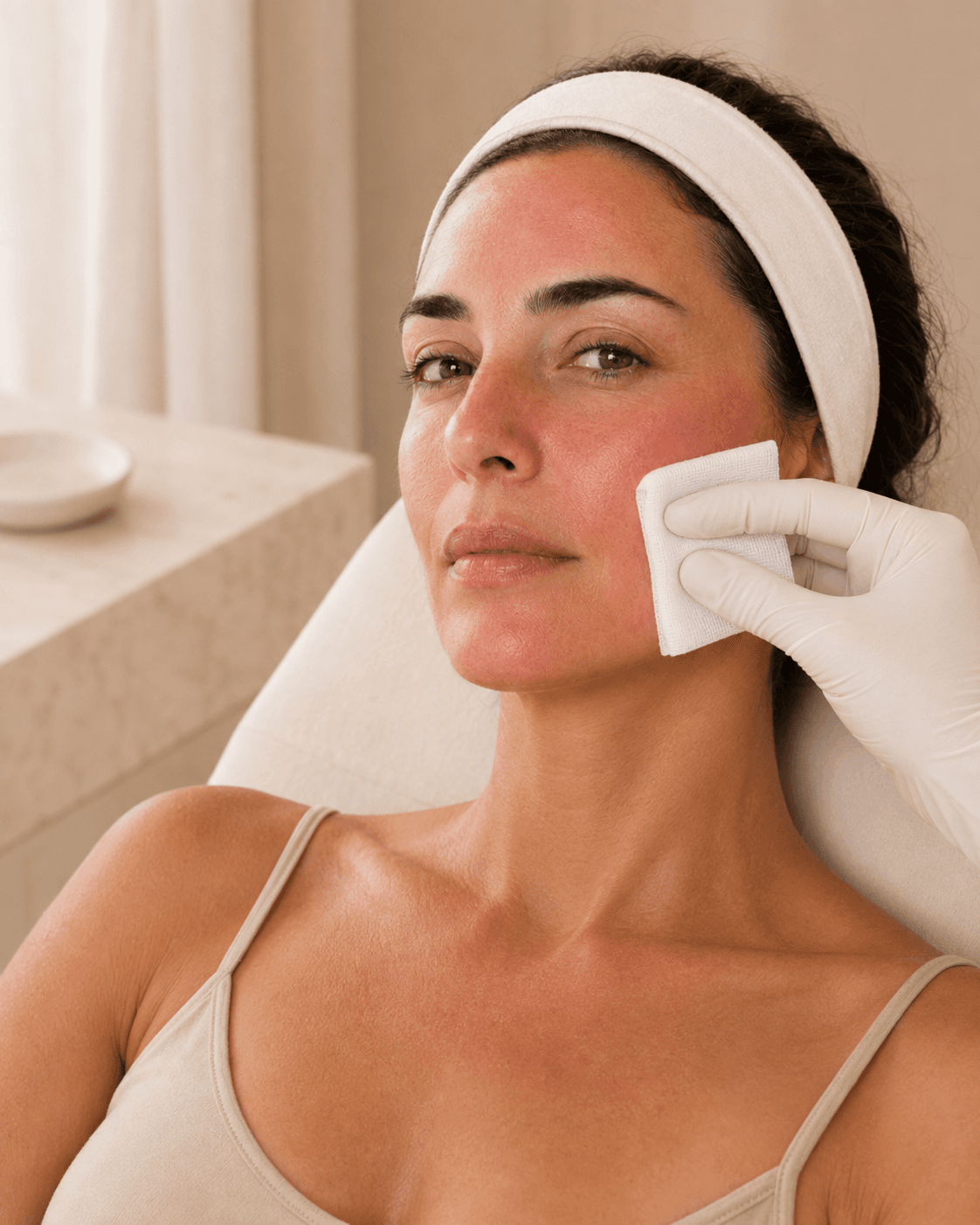
During healing, the skin barrier may be disrupted and the treated area may be red, swollen, peeling or crusted. Ultraviolet exposure can contribute to inflammation and post-inflammatory hyperpigmentation, particularly in pigment-prone skin. Picking, scrubbing or restarting strong active ingredients too early can also delay recovery or increase complications.
Immediately after a procedure, follow the prescribed cleansing, ointment and wound-care plan. Do not apply sunscreen to raw or open skin unless the clinician specifically instructs you to. Use physical shade and avoid direct exposure. Once re-epithelialisation has occurred and sunscreen is permitted, use a well-tolerated broad-spectrum product and add a hat or protective clothing.
The required duration of strict protection depends on procedure depth, skin type, healing and the condition being treated. After laser resurfacing, professional guidance notes that redness and sun sensitivity can persist for months. Chemical-peel reviews likewise emphasise daily sunscreen and sun avoidance during recovery to reduce pigmentary complications.
Contact the treating clinic for increasing pain, spreading redness, pus, fever, blistering, a cold-sore outbreak, delayed healing or unexpected pigment change. Good photoprotection protects the recovery; it does not replace medical aftercare.