UV and LED nail lamps are convenient, but they are not radiation-free. Here is what the evidence can — and cannot — tell us.
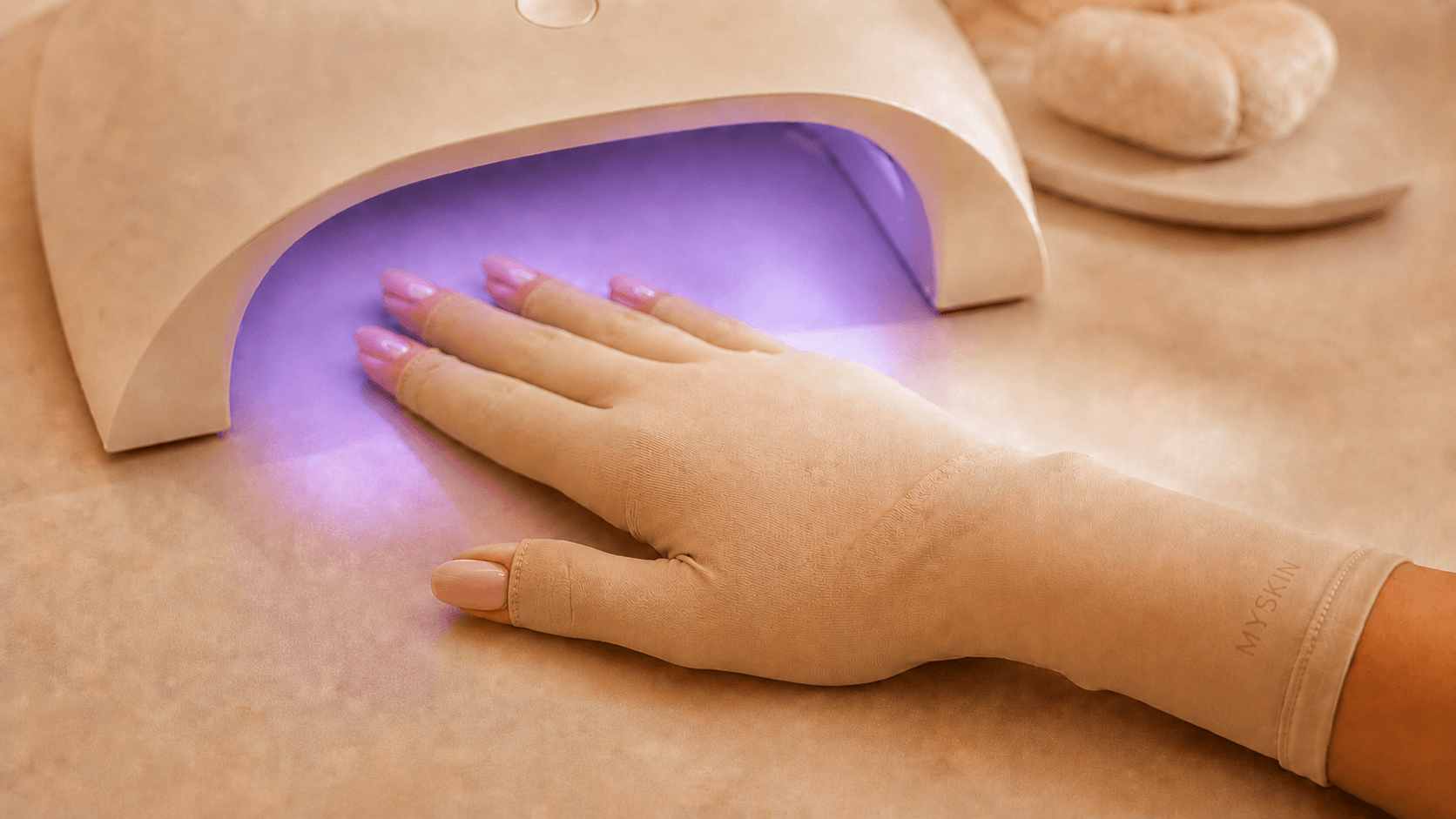
Gel manicures rely on light to cure, or polymerise, the product on the nail. Lamps marketed as “UV” and many lamps marketed as “LED” both commonly emit ultraviolet A (UVA) radiation; LED describes the light source, not the absence of ultraviolet radiation. The exact wavelength and output vary by device, which is one reason exposure estimates differ between studies.
UVA is biologically active. Unlike UVB, which is strongly associated with sunburn, UVA penetrates more deeply into the skin and contributes to oxidative stress, pigmentation and photoageing. Ultraviolet radiation is an established human carcinogen. That broad fact, however, does not automatically tell us the size of the risk from the short, localised exposures involved in a manicure.
A 2023 laboratory study exposed human and mouse cells to radiation from a UV nail dryer. The researchers observed reactive oxygen species, mitochondrial dysfunction, DNA damage and a dose-dependent increase in mutations. This is important mechanistic evidence, but it is not the same as evidence that a typical gel manicure causes skin cancer in people. The experiments used cultured cells without the skin’s protective outer layer, and some exposure protocols were longer than a routine curing cycle. The authors explicitly stated that their study did not directly quantify cancer risk in humans.
A second 2023 study using human keratinocytes found that a four-minute exposure — closer to some real-world manicure protocols — did not significantly reduce cell viability, whereas a twenty-minute exposure did. SPF 50 sunscreen improved cell viability in that experimental model. Taken together, current studies support caution but not alarm: nail lamps emit UVA and can cause measurable biological effects, while a direct causal link between routine lamp use and skin cancer has not been established by large epidemiological studies.
For anyone who wants to reduce avoidable exposure, the American Academy of Dermatology recommends applying a broad-spectrum, water-resistant SPF 30 or higher to the hands before a gel manicure, or wearing dark, opaque fingertip-free gloves. A garment should only be described as UPF 50+ when the fabric has been tested to an appropriate textile standard; colour or thickness alone is not proof of a UPF rating.
Protection should be precise rather than dramatic. Cover the skin while leaving the nail plates accessible, follow the lamp manufacturer’s curing times and avoid unnecessary repeat cycles. People who are photosensitive, take photosensitising medication, have a history of skin cancer or notice a changing lesion on the hand should seek individual advice from a dermatologist.